

Nicole Botha
Library of Hidden Arts
https://drive.google.com/drive/folders/1tTen7puF09aXDBXyMMckhuxPdASs98Ae?usp=sharing
Library of Auckland's youth street-culture
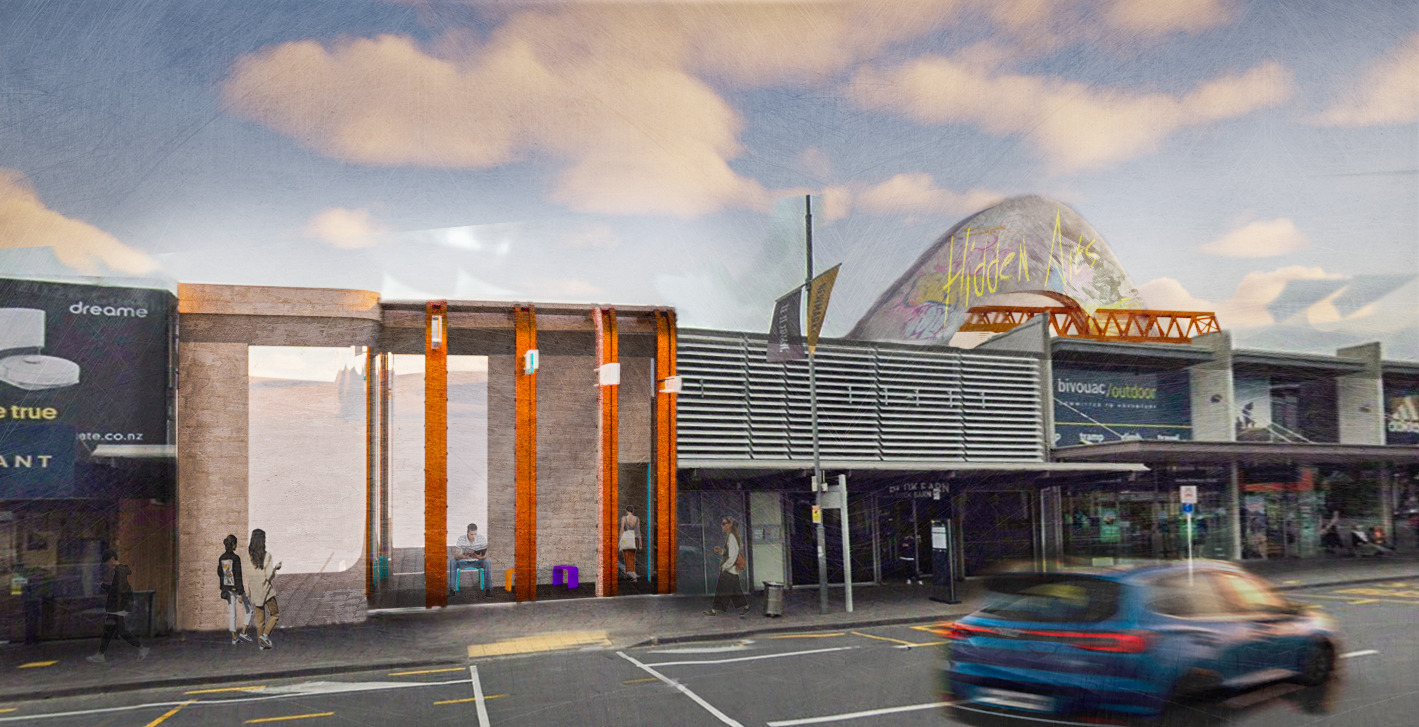
The Library of Hidden Arts is an arts library that celebrates Aucklands youth graffiti culture. Auckland is hugged in creation, stories, voices and expression. Mistakenly, society perceives the idea of graffiti as vandalism and looks no further than what's beyond the paint. Library of Hidden Arts is grounded in manaakitanga: care for people, held between people. It gently closes the distance between youth street artists and the wider community where a devide has been formed as a result of our negative perception of graffiti blinds us to only what we see. The library focuses on bringing these two social groups together through the sharing of creation and appreciation of Art. Offering broader opportunities for youth artists and a dedicated space to express, learn and create.
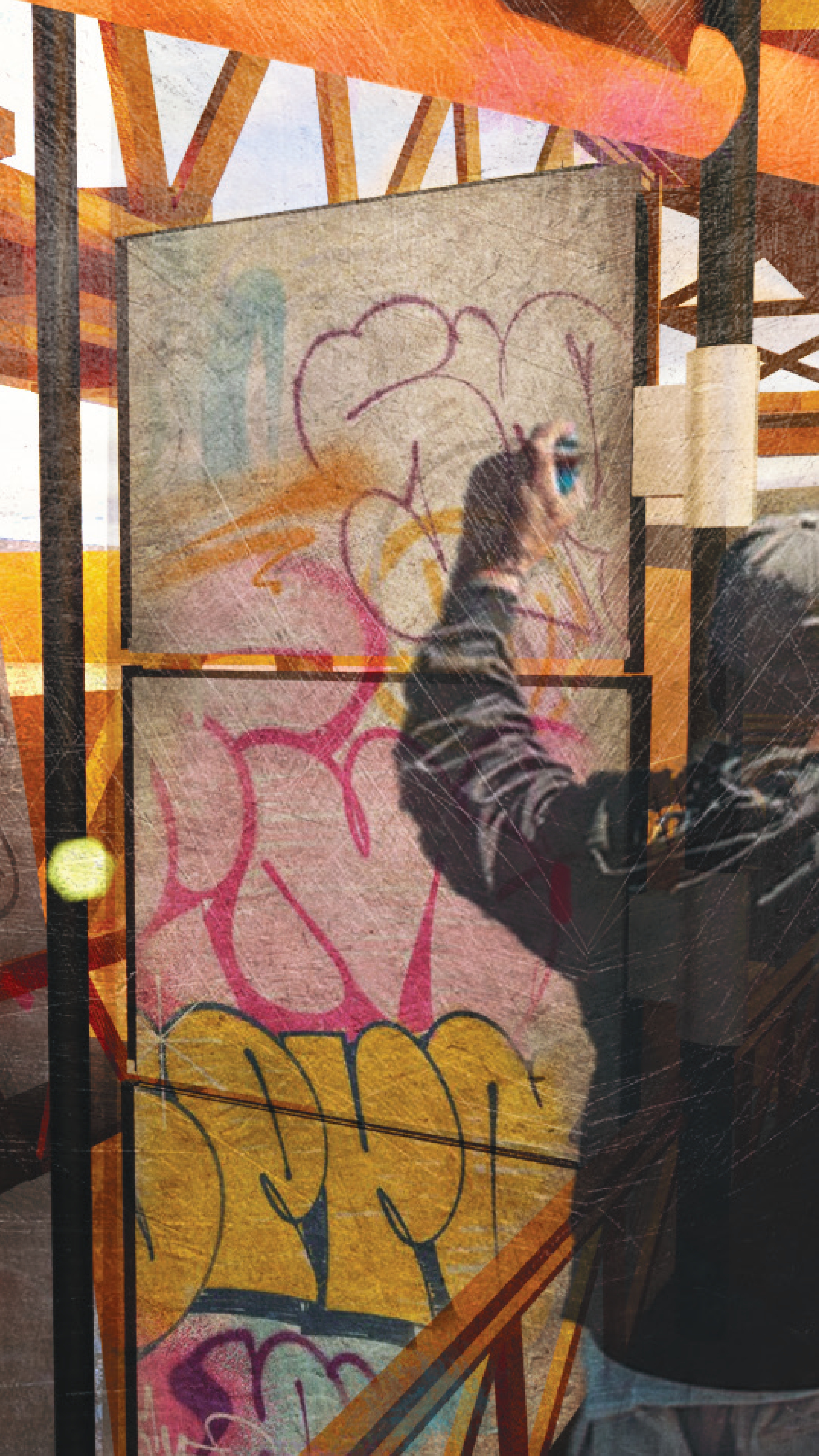
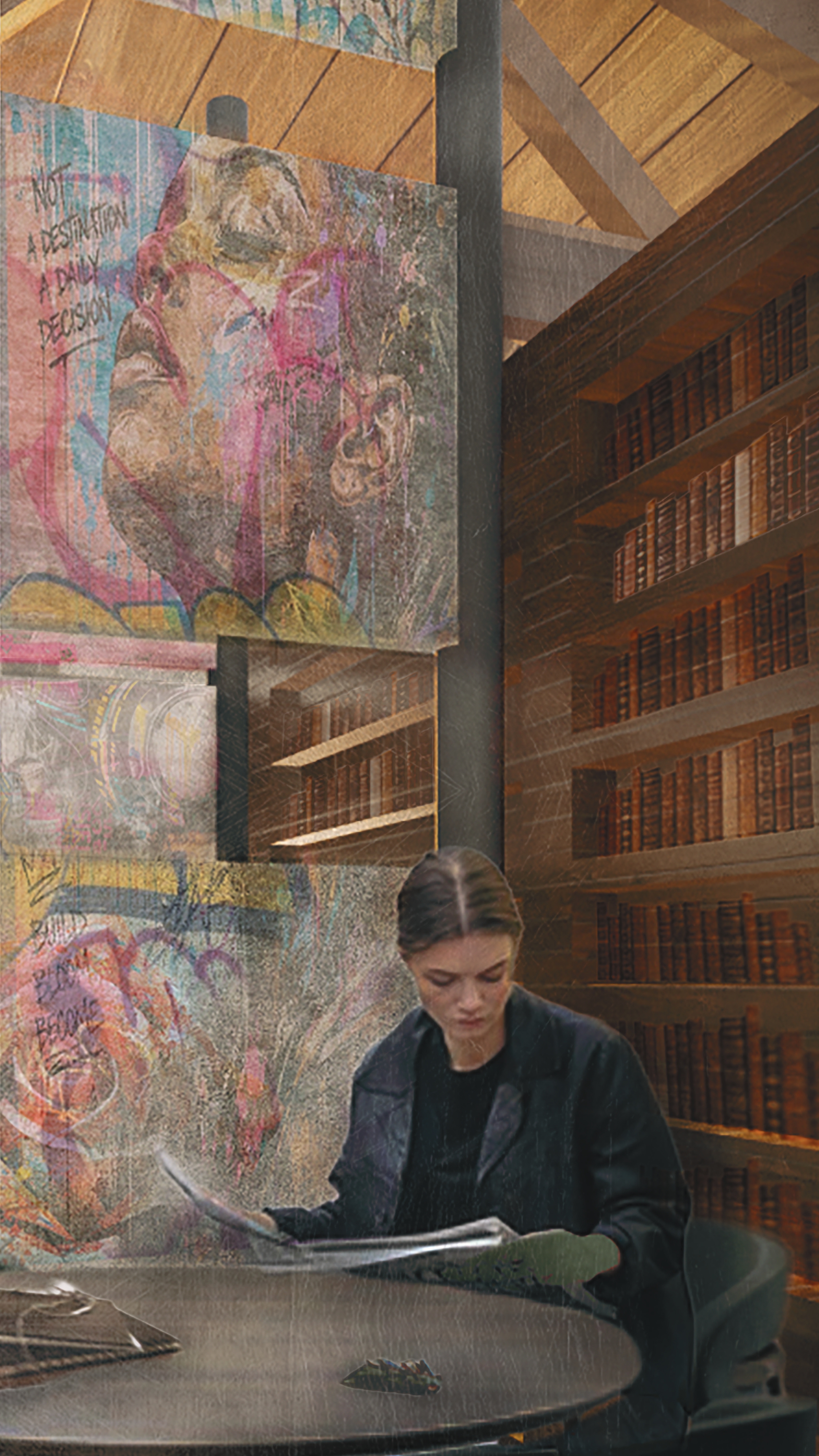
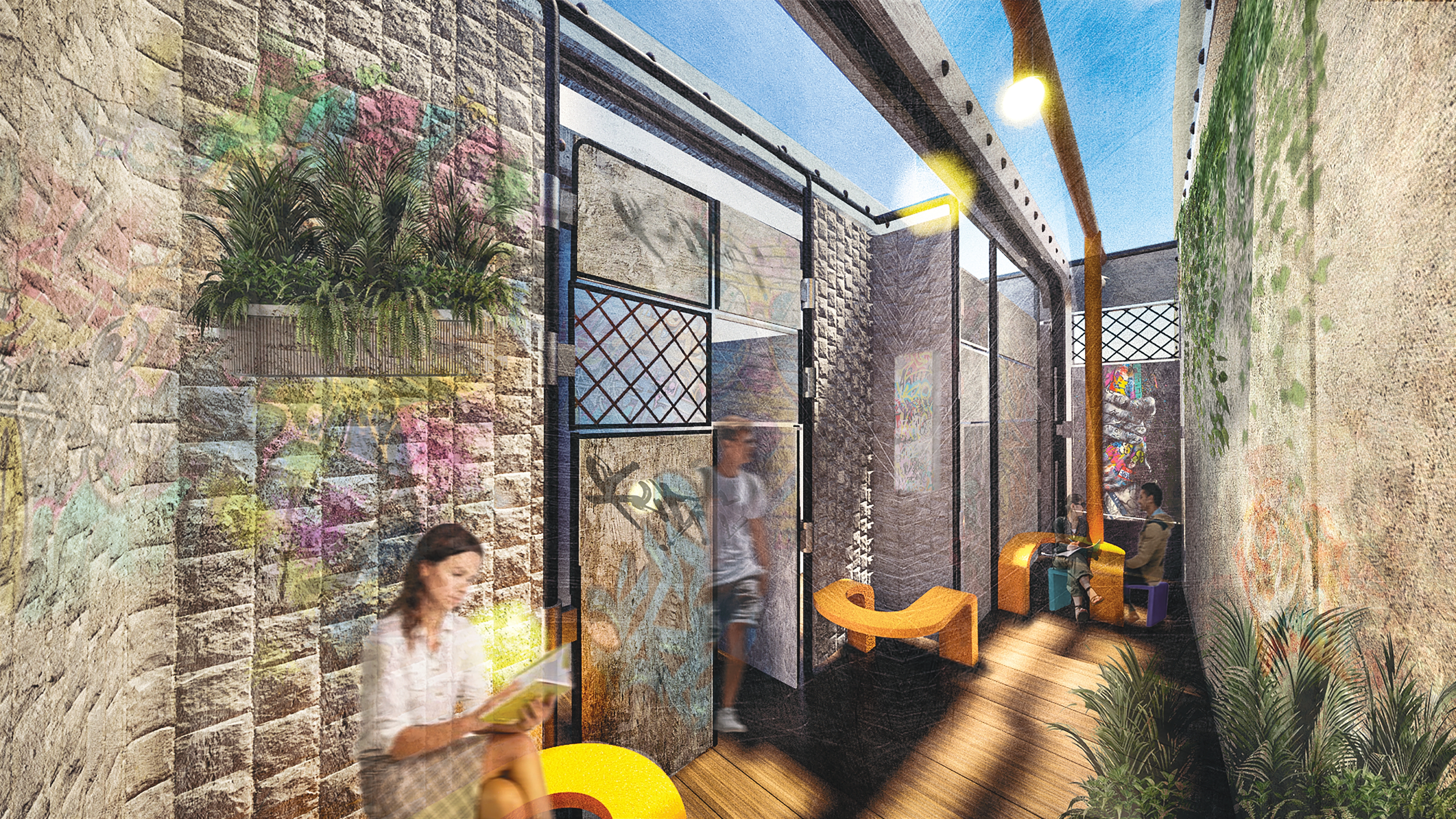
The space unfolds as an indoor library, a social space and a courtyard, a vessel in which youth street art can grow and evolve. With dedicated spaces to share, learn and collaborate through different forms of graffiti art styles, like any library, it holds knowledge for everyone and is a community driven by street culture. In the open studio, young artists and professional muralists learn alongside one another, passing knowledge through generations. Rotating canvas' gives their story an opportunity to be shared, keeping alive the“adrenaline buzz” through the idea of competition and risk that forms the culture. Because the space is public, glimpses of work in progress introduces curiosity, and curiosity invites conversation.
The library celebrates the sharing of creation and culture so that youth street art is claimed as a cultural practice, not a problem. It forms a setting where interaction feels natural and intimate, thus understanding grows, and overtime curiosity replaces assumption. Distance between the communities softens into familiarity, and Auckland shows its young people that their creativity belongs in the city, something to be celebrated together, offering a new perspective of Auckland’s youth street culture.